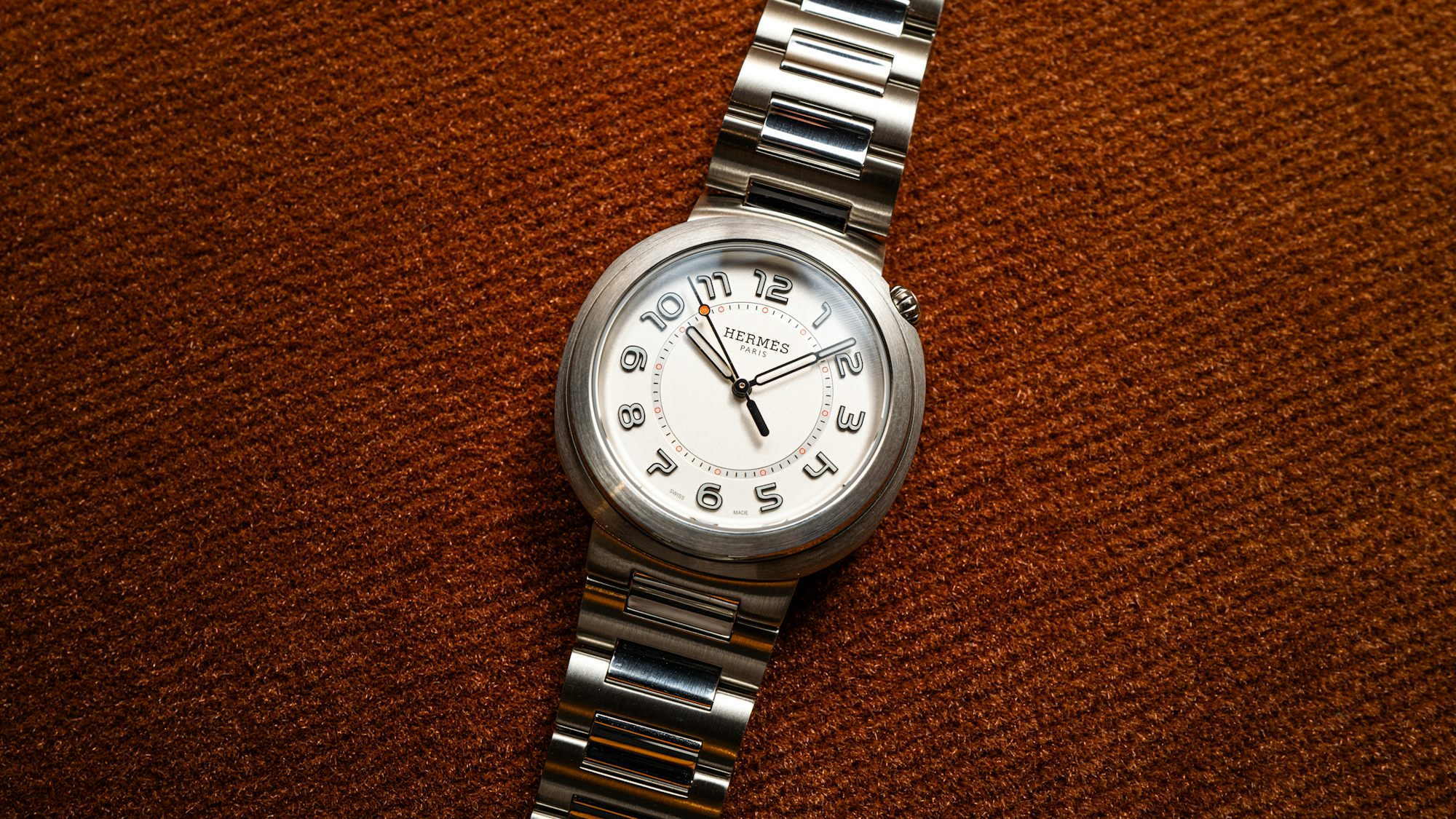
Ah, the captivating world of mechanical watches! It’s wonderful to delve into the intricate dance of tiny gears and springs that bring these miniature marvels to life. Even in our digital age, the allure of a mechanical wrist watch remains strong, drawing in enthusiasts who appreciate the artistry and history woven into each timepiece. The fascination with how mechanical watches work stems from their sheer ingenuity – telling time with no batteries or circuits, just pure mechanics. Let’s embark on a journey to uncover the secrets held within these tiny universes.
Working of Mechanical Watches: An Inside Look
At its heart, the working of mechanical watches relies on centuries-old principles of physics and engineering. Unlike their quartz counterparts that use electronic oscillators, mechanical watches operate purely through mechanical energy. Understanding the basic principles of mechanical timekeeping involves tracing the flow of power from its source all the way to the gentle sweep of the hands.
The journey begins with winding the watch. This action stores potential energy within a tightly coiled spring. As this energy is gradually released and regulated, it powers a series of gears and levers that ultimately move the hands on the dial. This entire process, from the initial winding to the final display of time, showcases a beautiful example of energy transfer.
Within the realm of mechanical watches, we encounter two primary types: automatic vs manual watch movements. A manual watch requires the wearer to periodically wind the crown to replenish the stored energy in the mainspring. On the other hand, an automatic watch incorporates a clever mechanism that harnesses the kinetic energy generated by the wearer’s wrist movements to automatically wind the mainspring.
Whether you prefer a classic manual timepiece or the convenience of an automatic, options like the silver gold Michael Kors watch offer both style and reliable performance, blending modern fashion with traditional watchmaking. While the end result – a ticking timepiece – is the same, the method of energy replenishment differs significantly.
Key Components and How They Function
The intricate mechanical watch mechanism is composed of numerous tiny parts, each playing a crucial role in the precise measurement of time. Let’s explore some of the key components and their functions:
1. The Mainspring
Think of the mainspring as the heart of a mechanical watch, the very source of its power. This long, thin ribbon of specially hardened steel is coiled tightly when the watch is wound, whether manually by turning the crown or automatically through the motion of a rotor. This coiling action stores potential energy, much like stretching a rubber band. As the mainspring slowly unwinds, it releases this stored energy, providing the driving force for the entire traditional watch movement. The controlled release of this energy is paramount to the accurate mechanical timekeeping that these watches are known for.
2. Gear Train
The energy released by the unwinding mainspring needs to be carefully managed and transferred. This is where the gear train comes into play. This series of interconnected wheels, or gears, acts as a transmission system within the watch. The gear train takes the relatively forceful and rapid unwinding of the mainspring and gradually reduces its speed while simultaneously increasing its torque. This controlled transfer of power is essential for driving the escapement and ultimately the hands at the correct pace. The precise meshing of these tiny gears is a testament to the intricate engineering of a mechanical wrist watch.
3. Escapement Mechanism
The escapement is often referred to as the “heartbeat” of the watch, and for good reason. Its primary purpose is to regulate the release of energy from the gear train in a controlled and consistent manner. Without an escapement, the mainspring would simply unwind rapidly, and the watch hands would spin wildly. The watch escapement typically consists of two main parts: an escape wheel with uniquely shaped teeth and a lever with pallets that interact with these teeth.
The oscillating motion of the balance wheel (which we’ll discuss next) causes the lever to alternately lock and release the escape wheel. This start-stop action creates the characteristic “tick-tock” sound of a mechanical watch and ensures that the gears advance in discrete, measurable steps. Understanding the watch escapement is key to grasping how a mechanical watch achieves accuracy.
4. Balance Wheel and Hairspring
The balance wheel is a weighted wheel that oscillates back and forth, much like a pendulum in a grandfather clock, but at a much higher frequency. This oscillation is what divides time into equal, tiny intervals. Working in tandem with the balance wheel is the hairspring, a delicate spiral spring attached to its center. The hairspring provides a restoring force, meaning that when the balance wheel is displaced from its resting position, the hairspring exerts a force that pushes it back. This interplay between the inertia of the balance wheel and the elasticity of the hairspring creates a resonant system that oscillates at a very precise rate. The frequency of this oscillation is crucial for the accuracy of the mechanical timekeeping. Adjustments to the hairspring’s effective length are often made to fine-tune the watch’s rate.
5. Dial Train and Hands
The carefully regulated motion generated by the escapement and the gear train needs to be translated into the movement of the watch hands on the dial. This is the role of the dial train, also known as the motion works. This series of smaller gears further reduces the speed of the movement coming from the main gear train. Through a specific arrangement of pinions and wheels, the dial train ensures that the hour, minute, and second hands rotate at their correct relative speeds. The precise interaction of these components allows us to read the time accurately from the mechanical wrist watch.
Manual vs Automatic Mechanical Watches
As mentioned earlier, a key distinction within the world of mechanical watches lies in their winding mechanism. A hand-wound watch, or manual watch, requires the wearer to physically turn the crown, usually once a day, to wind the mainspring and store energy. This daily ritual connects the wearer more directly to their timepiece.
In contrast, an automatic vs manual watch differs in how it receives its energy. An automatic, or self-winding, watch features a weighted rotor that pivots freely on a central staff. As the wearer moves their wrist throughout the day, the rotor spins due to gravity and inertia. This rotational motion is then translated through a series of gears to automatically wind the mainspring. While convenient, the principle of energy storage and release remains the same as in a manual watch. Many aficionados of men’s designer watches value the effortless functionality of an automatic movement, whereas others deeply appreciate the tangible connection of manually winding their timepiece.
Craftsmanship and Swiss Watchmaking
The creation of a traditional watch movement is a testament to human ingenuity and meticulous craftsmanship. Nowhere is this more evident than in the legacy of swiss mechanical watches. For centuries, Switzerland has been the epicenter of fine watchmaking, renowned for its precision engineering, intricate finishing, and unwavering commitment to quality. Brands like Rolex, Omega, Seiko (while not strictly Swiss, a powerhouse in mechanical watchmaking), Patek Philippe, Vacheron Constantin, Tag Heuer, and Longines have all contributed significantly to the art and science of mechanical timekeeping.
These brands often maintain age-old traditions in their manufacturing processes, with skilled artisans hand-assembling and meticulously adjusting the tiny components of each movement. However, they also embrace modern advancements in materials and manufacturing techniques to enhance the precision and reliability of their timepieces. The “Swiss Made” designation on a watch is often seen as a mark of quality and heritage in the world of mechanical timekeeping.
Why Mechanical Watches Still Matter
In an age dominated by digital devices that display time with perfect accuracy, one might wonder why mechanical wrist watches continue to hold such a strong appeal. The answer lies in a confluence of factors that go beyond mere timekeeping. Firstly, there is the undeniable artistry and complexity inherent in a mechanical watch. The intricate dance of hundreds of tiny parts, all working in perfect harmony to measure time, is a marvel of engineering. Owning a mechanical watch is like owning a miniature machine, a testament to human ingenuity.
Beyond their functional appeal, mechanical watches boast a captivating history and an enduring quality, a stark contrast to the planned obsolescence of many electronic gadgets. Consider, for example, how designs have often been inherited, forging a tangible link to bygone eras. While a Casio watch, with its digital heart, might be replaced with newer models over time, a meticulously cared-for mechanical timepiece can persevere for generations, evolving into a treasured family heirloom.
Finally, there is an emotional value associated with mechanical watches that digital devices simply cannot replicate. The subtle weight on the wrist, the smooth sweep of the second hand (in many models), the gentle ticking sound – these tactile and auditory experiences create a connection between the wearer and the timepiece. A mechanical watch is not just a tool; it’s a statement of appreciation for craftsmanship, history, and enduring design. Compared to the cold precision of digital timekeeping, mechanical watch basics offer a warmth and character that resonates with many.
Conclusion
The working of mechanical watches is a captivating journey into the realm of miniature mechanics. From the unwinding of the mainspring to the precise oscillation of the balance wheel and the elegant sweep of the hands, every component plays a vital role in the accurate measurement of time. Whether it’s a manually wound piece that requires a daily touch or an automatic marvel powered by the wearer’s movement, the underlying principles of mechanical timekeeping remain a testament to human ingenuity.
So, the next time you encounter a mechanical watch, take a moment to appreciate not just its aesthetic appeal but also the intricate world of gears, springs, and levers ticking away within. These timepieces are more than just instruments for telling time; they are miniature mechanical marvels, embodying history, craftsmanship, and a timeless elegance that continues to fascinate and endure.